When Must Tribal Courts Record Proceedings?
Share
Tribal courts have an important responsibility: maintaining accurate records of judicial proceedings. Audio recordings can preserve testimony, support appeals, and provide a reliable account of what occurred during a hearing.
But are tribal courts legally required to record their proceedings?
The answer depends on the type of proceeding and the laws governing the individual tribal court. Federal law establishes recording requirements for certain criminal cases. Individual tribal governments may also adopt their own recording requirements, including rules that apply to civil proceedings.
Federal Recording Requirements for Tribal Courts
Tribal Law and Order Act
The Tribal Law and Order Act of 2010 (TLOA) expanded the sentencing authority of qualifying tribal courts.
Under the Indian Civil Rights Act, as amended by TLOA, tribal courts may impose sentences exceeding one year for a single offense, subject to specified limits and procedural protections. One of those protections is a requirement to maintain a record of the criminal proceeding, including an audio or other recording of the trial proceeding. This requirement appears in 25 U.S.C. § 1302(c)(5).
This requirement applies when a tribal court imposes a total term of imprisonment exceeding one year. It does not establish a universal federal requirement to record every tribal court hearing.
Violence Against Women Act
The Violence Against Women Act (VAWA) allows qualifying tribal courts to prosecute certain crimes committed by non-Indians in Indian country. The law was expanded in 2022 to cover additional crimes.
Under 25 U.S.C. § 1304(d), tribal courts exercising this jurisdiction must provide additional procedural protections when imprisonment of any length may be imposed. These include the requirement to maintain a record of the criminal proceeding, including an audio or other recording of the trial proceeding.
Unlike TLOA’s enhanced-sentencing provision, this requirement can apply even when the potential prison sentence is one year or less. However, VAWA does not require every tribal court hearing to be recorded or specify what recording equipment must be used.
Tribal Courts May Have Additional Recording Requirements
In addition to federal requirements, individual tribal governments may establish their own rules for recording court proceedings. These rules can apply to civil cases and other hearings not covered by federal recording requirements. Some tribal courts require electronic recordings broadly, while others identify particular proceedings or allow alternative forms of documentation.
Three examples of how these requirements can differ:
- Penobscot Nation (Maine): The Nation’s published civil procedure rules require all court proceedings covered by those rules to be electronically recorded. See Rule 35(C).
- Ely Shoshone Tribe (Nevada): Under the tribe’s published 2008 court rules, Rule 72 identifies specific proceedings that must be recorded, including certain criminal hearings and traffic trials. The rules permit either sound recording equipment or a certified shorthand reporter. See Rule 72.
- Native Village of Eyak (Alaska): The tribal judicial code requires audio recordings of hearings and written notes for panel-style proceedings. However, traditional peacemaking circles may be documented through written consensus agreements instead of audio recordings. See Section 5.
Court Records and Audio Recordings Are Not the Same Thing
Maintaining a court record does not always require an audio recording. Court records may include written orders, filed documents, hearing minutes, transcripts, and other materials documenting judicial proceedings.
Tanana Chiefs Conference guidance indicates that a court of record does not necessarily need to make audio recordings if adequate written records are maintained. However, recording hearings are generally recommended.
This distinction is important. A court may satisfy some recordkeeping obligations through written documentation, but written notes cannot replace an audio recording when federal law or tribal court rules specifically require one.
Why Record Proceedings When They Aren’t Required?
Even when audio recording is optional, it can provide important benefits:
- Appeals: Recordings preserve testimony and statements that appellate judges may need to review.
- Accuracy: An audio record can help resolve questions about what was said during a hearing.
- Transcription: Recordings provide source material for preparing written transcripts, including those produced with AI-assisted transcription software.
- Accountability: Recordings create a more complete account of proceedings than handwritten notes alone.
Understanding Your Court’s Recording Obligations
Tribal court recording requirements depend on federal law, tribal codes, and the nature of the proceedings.
Court administrators should review their applicable rules to determine when recordings are mandatory and when other forms of documentation are permitted. They should also establish appropriate procedures for preserving recordings and protecting confidential court records.
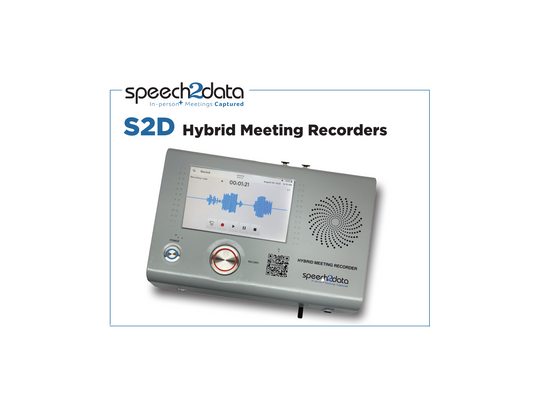
For courts evaluating recording equipment, Speech2Data offers portable digital audio recorders designed for courtroom proceedings.
Explore Speech2Data’s Tribal Court Recording Solutions
This article provides general information about tribal court recording requirements and is not legal advice. Tribal courts should consult their applicable laws, court rules, and legal counsel to determine their recording obligations.